About Me
I Opened the Textbook and Thought I Had Hit the Jackpot
If I had to explain what makes my approach to teaching copywriting different, I would start with a classroom full of struggling readers.
Early in my teaching career, I opened the literature textbook and got excited.
It included stories by Arthur C. Clarke, Truman Capote, Ray Bradbury, and other writers I admired. I could already imagine the discussions, the writing assignments, and the ideas I wanted to explore with my students.
Then I met the 144 students I had been assigned to teach.
Most were reading two or three years below grade level.
Within a few months, they would be expected to pass a state reading test written at their official grade level. I was stepping into a serious deficit, and the responsibility for helping them close that gap belonged to me.
Then the Classroom Door Opened
Students arrived with different skill levels, different problems, different levels of motivation, and very different ideas about what they were capable of doing.
A lesson that worked perfectly in one class could fall apart in the next. Plans had to change. Explanations had to change. Sometimes the entire approach had to change before the class period ended.
That was where I learned how teaching really works.
The First Lesson Was Painfully Simple
I learned how to take a difficult idea and break it into smaller pieces. I learned how to explain the same concept in several ways. I learned how to recognize when students were confused, even when they were too embarrassed to admit it.
I learned how to build one skill on top of another, in the right order, until progress became possible.
I also learned that information alone accomplishes very little.
Students needed structure. They needed repetition. They needed examples they could understand. They needed practice, feedback, encouragement, and someone willing to keep adjusting the lesson until the material finally clicked.
Progress Rarely Announced Itself
The process was incredibly difficult.
It was also deeply rewarding.
I watched students begin to understand material that had once intimidated them. I saw their confidence grow. I saw them improve through discipline, consistency, and steady effort.
None of it happened overnight.
The results came because the instruction was organized, practical, and built around what the students actually needed.
Ten Years Later, I Knew Something Most Experts Never Learn
Over the course of ten years, I taught more than a thousand high school students across a wide range of skill levels.
I did plenty of reading on educational theory along the way. Some of it was useful. Much of it collapsed the moment it met a real classroom.
Real education is messy.
Unexpected problems appear. Attention disappears. Confusion spreads. Students misunderstand things you thought were perfectly clear.
A capable teacher learns to diagnose the problem, adjust the explanation, and keep moving.
Knowing Something and Teaching It Are Separate Skills
That experience shaped the way I teach copywriting today.
Many accomplished copywriters eventually decide to teach. They know how to write. They understand persuasion. They may have years of successful campaigns behind them.
Teaching requires another set of skills.
A person can understand copywriting at a high level and still struggle to explain it clearly. Deep knowledge does not automatically produce a useful lesson.
Students can easily receive too much information, too little structure, and no clear sequence for applying what they have learned.
A Mountain of Information Can Still Leave You Empty-Handed
I have experienced that kind of instruction myself.
I have read the books, taken the courses, studied under skilled copywriters, and worked hard to develop my own ability.
Some teachers were excellent.
Others delivered piles of disconnected tactics and called it overdelivery.
That approach leaves students impressed by the volume of information and uncertain about what to do next.
My Teaching Method Was Forged Under Pressure
My approach comes from ten years of face-to-face teaching under real pressure.
I teach copywriting in a deliberate sequence. I break complex ideas into understandable parts. I explain why each principle matters, show how it works, and give you a practical way to apply it.
Each skill supports the next one.
You receive an education designed to help you understand, practice, and use copywriting with confidence.
Here Is the Advantage You Get
I am a copywriter by trade and an educator by training, experience, and temperament.
I spent years learning how to help people make sense of difficult material. I developed those skills in classrooms where clarity mattered, preparation mattered, and results mattered.
Now I use those same skills to teach copywriting.
The Market Is Wide Open for People Who Can Write
There has rarely been a better time to learn it.
Businesses need clear messages. Experts need help communicating their value. Opportunities exist across industries, platforms, and markets.
You can take advantage of those opportunities once you know what to say, why it works, and how to put the pieces together.
That is what I am here to teach you.
Welcome aboard.
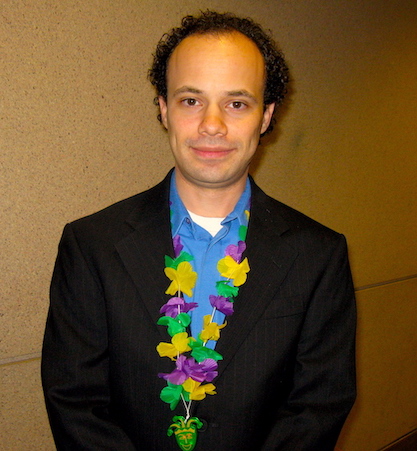
Richard Winser,
Copywriting Teacher