
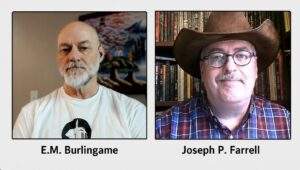
Joseph P. Farrell, Oxford scholar and author of more than 25 books, stopped posting on Facebook because he feared his writing would feed AI training data. He now communicates on YouTube.
E.M. Burlingame, Green Beret and author of 10 books, is taking the opposite approach. He is publishing his new book chapter by chapter on Substack. His rationale: he wants his ideas fed into the “Beast system” so they travel farther.
Two established authors. One machine threat. Two opposite bets.
Farrell is playing defense. His strategy treats an idea as property: keep it scarce, keep it close, and it remains yours. The machine cannot eat what it cannot reach.
Burlingame is playing offense. His strategy treats an idea as contagion: survival depends on spread. Get it into the bloodstream of the beast, and the beast may carry it farther than you ever could.
But Farrell’s retreat may be symbolic. He has already published 25 books. If they exist digitally, withdrawing from Facebook does not erase them from whatever systems may already contain them. And YouTube transcripts are hardly hidden. The wall has an open door.
Burlingame accepts the opposite premise: the ingestion is happening anyway. So rather than starve the Beast, he plates the meal himself.
If your goal is protecting a product, a book, course, or paid body of work, control makes sense. Scarcity is a business model.
If your goal is shaping thought, spreading ideas, or even influencing machine outputs, Burlingame’s flood makes more sense. Folk tales survive not because someone guards them, but because everyone carries them.
So who is right?
It depends on what you want your words to do after you write them.
Farrell chose the wall. Burlingame chose the flood. Both answer the same fear. Only one admits the fear has already come true.
RW
.
.
.