
What if the most informative headline is costing you readers?
In January 2025, researchers Marianne Aubin Le Quéré and J. Nathan Matias published an analysis of 8,977 headline experiments in 𝘚𝘤𝘪𝘦𝘯𝘵𝘪𝘧𝘪𝘤 𝘙𝘦𝘱𝘰𝘳𝘵𝘴.
Their finding challenges two familiar pieces of advice: explain everything clearly, and keep readers guessing.
Both can backfire.
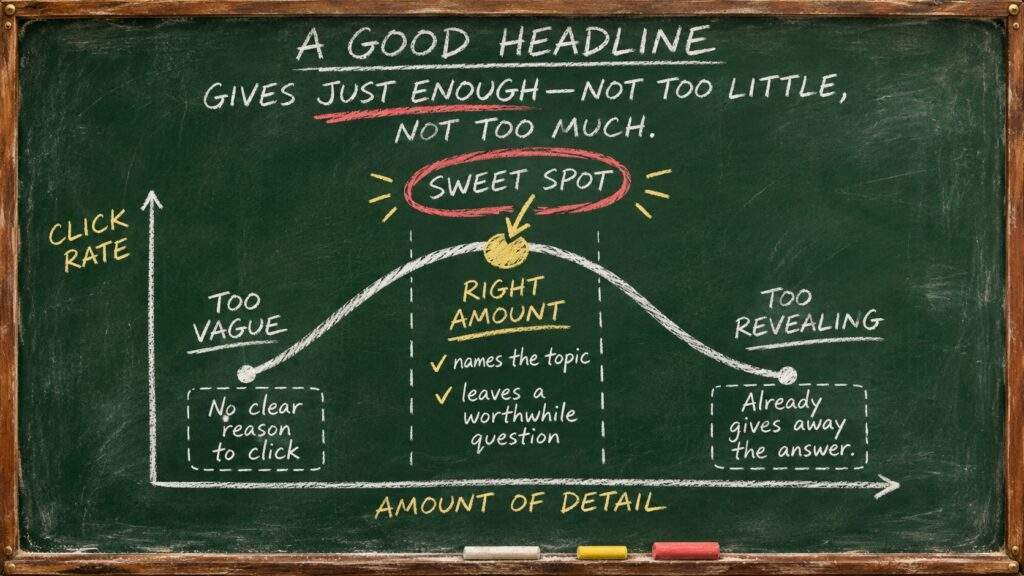
When headlines were excessively vague, making them more concrete increased click-through rates. But when headlines were already highly concrete, adding more detail reduced clicks.
The researchers found evidence of a sweet spot between the extremes.
Consider three hypothetical headlines for the same article.
𝗧𝗼𝗼 𝘃𝗮𝗴𝘂𝗲: “This Surprising Trick Changes Everything.”
𝗧𝗼𝗼 𝗿𝗲𝘃𝗲𝗮𝗹𝗶𝗻𝗴: “Removing the Opening Paragraph Can Improve a Sales Letter by Bringing the Main Benefit Closer to the Headline.”
𝗠𝗶𝗱𝗱𝗹𝗲 𝗴𝗿𝗼𝘂𝗻𝗱: “Could Your First Paragraph Be Hiding Your Strongest Selling Point?”
The third gives readers a recognizable problem and a question worth investigating.
For marketers, three lessons follow:
First, identify the subject. Mystery without context gives busy readers little reason to care.
Second, preserve a meaningful unanswered question. If the headline delivers the entire discovery, why continue reading?
Third, test competing levels of detail. The research measured news clicks, so don’t assume the same headline will produce more purchases.
Curiosity needs substance, and substance needs careful timing.
Your job is to reveal enough for readers to recognize the value waiting inside, while leaving something worthwhile to discover.
Give them a reason to enter. Then make the answer worth the trip.
RW
.
.
.