
After “chat” came “agents.”
Instead of asking AI a question, you could hand it a task and let it work. It could search, schedule, browse, and operate software.
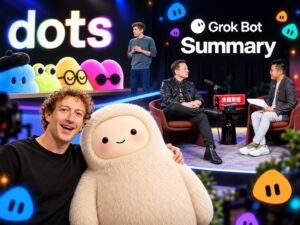
Naturally, the race began. Grok released Grokbot, Meta released Muse, and OpenAI released Dot. Once major companies moved in the same direction, agents began to look inevitable, but competitor activity can create an illusion: everyone is building agents, therefore people must want agents.
That reverses the order of strategy.
In Gary Gagliardi’s interpretation of Sun Tzu, opportunity begins with an opening in the environment, usually an unsatisfied need. A new capability does not create that opening, so the useful question is not, “Who has the best agent?” but “Where is the opening?”
The real opponent may be the customer saying, “I’ll just do it myself,” “I’ll ask ChatGPT,” or “I’ll Google it.”
Existing behavior has an enormous advantage because it is familiar, so an agent must create enough value to make changing worthwhile.
AI insiders can miss this because they spend their days around autonomous workflows, scheduled tasks, and overnight research. Ordinary customers may think their current method works fine.
That is why attention is not momentum. Demos, coverage, and early-adopter excitement show that people are watching, not that they are changing behavior.
The better question is: What annoying problem are people already trying to get rid of?
Find that first, then use the agent to make the problem disappear.
Because the agent wars may have started before the agent market did.
RW
.
.
.