
[Tales from the Swipe File]
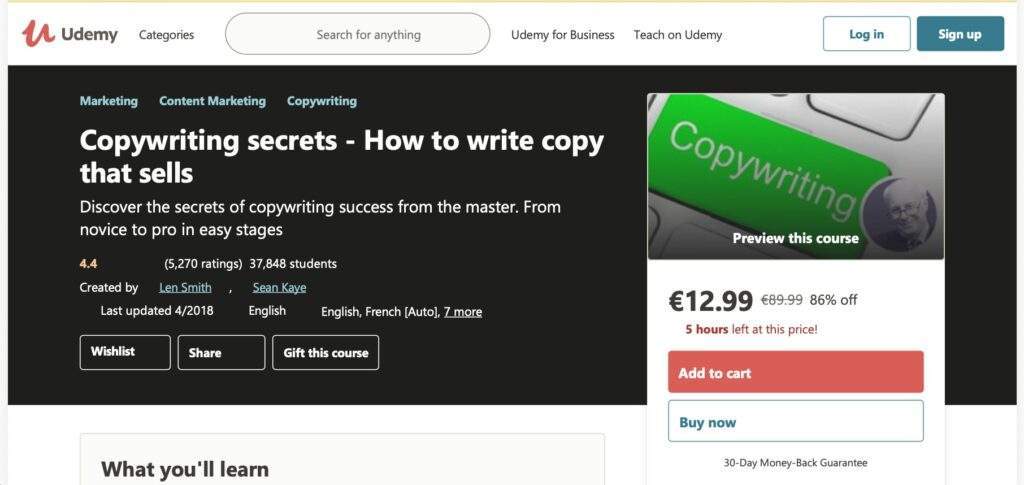
Most copywriters would probably ignore this headline:
“Copywriting secrets — How to write copy that sells.”
Nothing clever. Nothing surprising. No curiosity trick. Yet it has helped sell a course to tens of thousands of students.
That makes it worth studying.
The headline does two jobs immediately. “Copywriting secrets” tells you exactly what territory you are entering, while “how to write copy that sells” tells you why you should care. It does not promise better writing, more creativity, or impressive technique. It connects copywriting directly to the commercial result.
Then the subhead starts removing reasons not to buy:
“Discover the secrets of copywriting success from the master. From novice to pro in easy stages.”
“From the master” introduces authority. “From novice to pro” gives the buyer a before-and-after picture. But the phrase I would steal is “in easy stages.”
Copywriting looks difficult because it is difficult. Research, headlines, leads, offers, proof, objections, structure, calls to action: a beginner sees one enormous skill surrounded by twenty smaller ones.
“In easy stages” changes the size of the job.
You are no longer being asked to master copywriting. You are being asked to take the next manageable step.
That suggests a useful rule for course copy:
Let the headline sell the destination. Let the subhead reduce the apparent difficulty of getting there.
A lot of marketers do the opposite. They spend the headline trying to sound original, then waste the subhead repeating the promise.
This example is ordinary language doing actual sales work.
Cleverness would not necessarily improve it. It might actually get in the way.
RW
.
.
.