
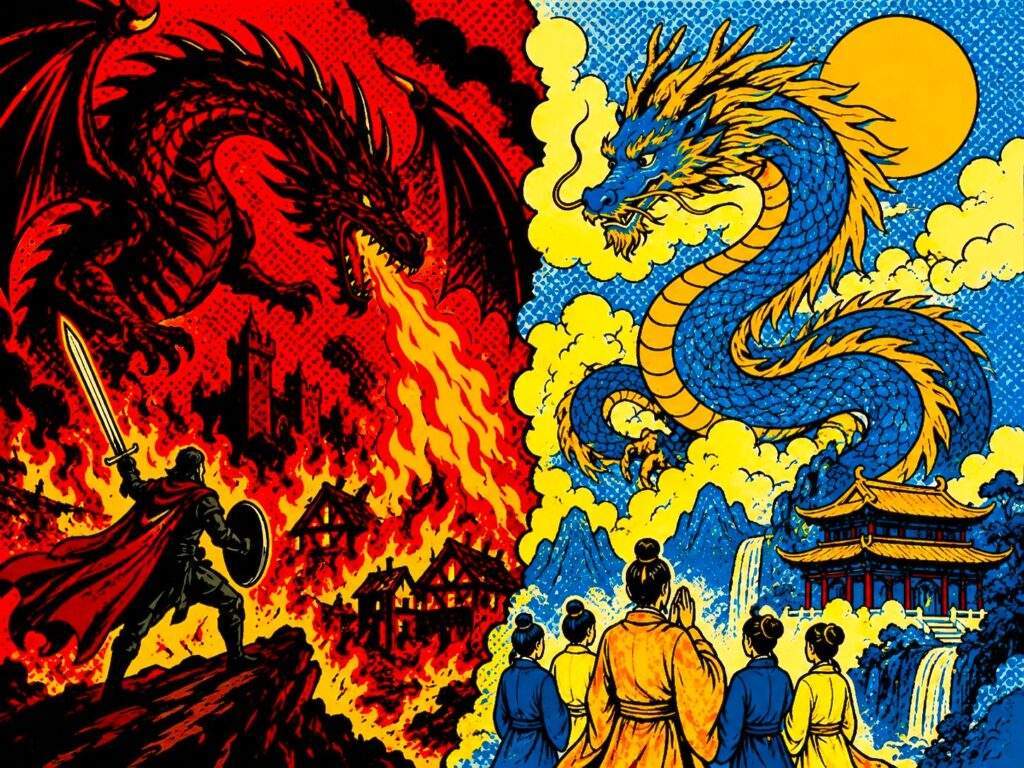
Imagine you are launching a luxury brand in East Asia. You want to signal power and ancient wisdom, so you choose the dragon as your symbol. It seems like a perfect choice: iconic, beautiful, and universally recognized. But there is a hidden trap.
In the West, a dragon is typically a monster. It is a creature of fire and scales that hoards gold and destroys villages. When a Westerner sees a dragon, they see a villain to be defeated. The emotional response is fear or tension.
In China, however, the dragon is a benevolent deity. It represents wisdom, prosperity, and good fortune. It is a creature to be revered, not fought. Visually, they look almost identical, but their meanings are polar opposites.
Many international brands make a dangerous assumption: they believe that because a symbol is recognizable, it is also interpreted the same way everywhere. They think, “A dragon means power, so we are good to go.”
But visual resemblance does not guarantee the same emotional impact. You might accidentally cast your brand as the villain.
Don’t just research what a symbol looks like; research how it behaves in the local culture. Don’t just translate the image, translate the intent.
RW
.
.
.